The same information gets entered twice.
Connect the steps between teams instead of asking people to copy records between tools.
Custom software development in Kenya
Your organisation has its own processes, people and priorities. We build custom software that brings them together, so your team can spend less time working around tools and more time serving customers.
Tell us what needs to work better and what you already have in place.
An order lives in one system. Stock is tracked in another. Someone has to bring the numbers together before a decision can be made. As your organisation grows, those gaps become harder to manage.
Connect the steps between teams instead of asking people to copy records between tools.
Bring the information behind orders, payments and activity into a clearer view.
Build around the way your organisation needs to operate, with room to adapt as that changes.
We agree the scope around the people using the system and the work they need to complete.
Connect purchasing, stock, orders, approvals and payments in workflows your team can follow.
Give people a place to request services, follow progress and access the information relevant to them.
Help teams manage records, assign work and see the information they need to make decisions.
Link existing applications and payment services so information can move between them, with clear checks when something needs attention.
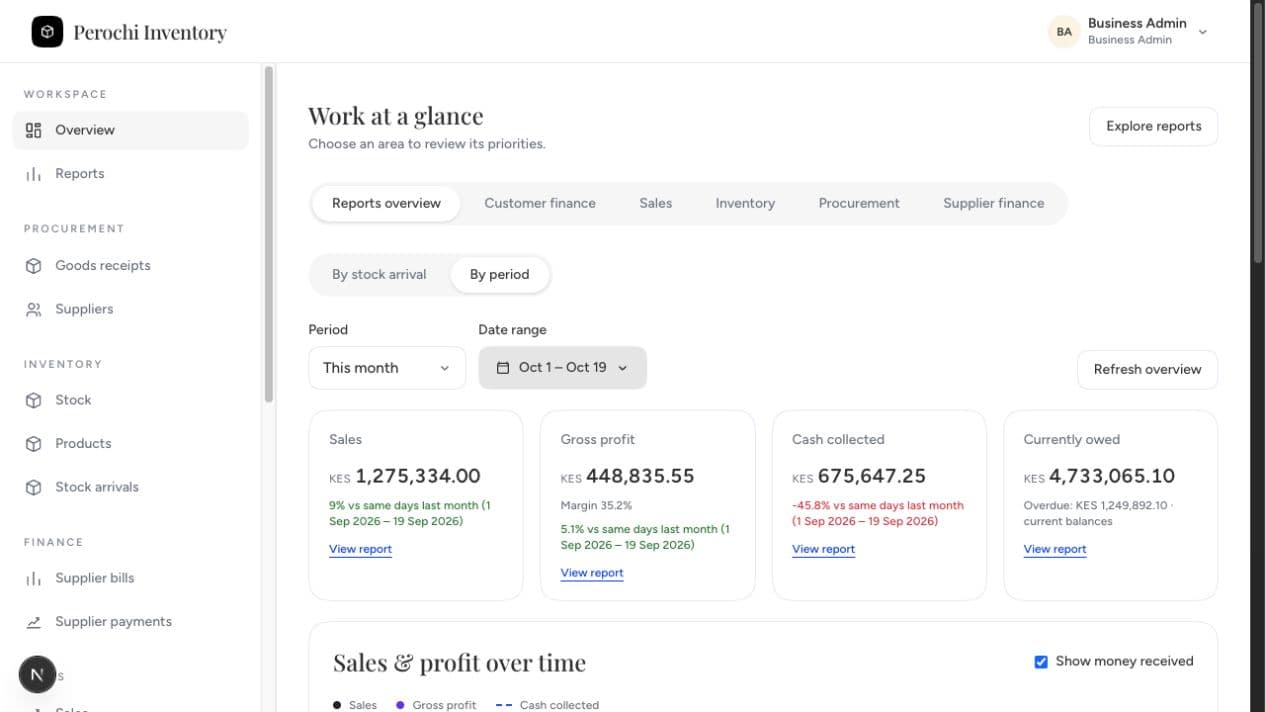
Inventory is Perochi’s own product. We developed its connected workflows for procurement, stock traceability, sales, invoicing, payments and reporting.
Explore Inventory
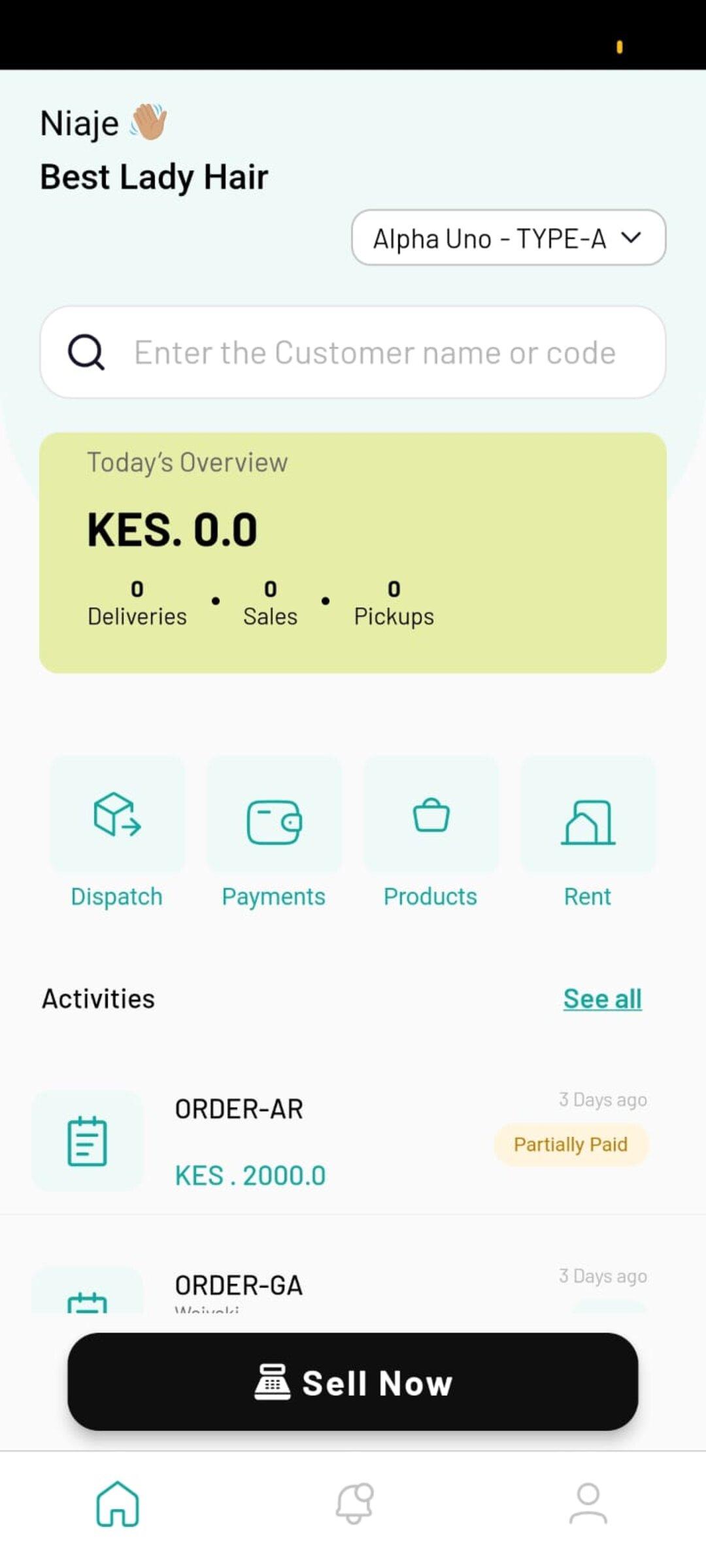
One of our team members designed the system architecture, developed the backend and helped shape the user experience. The work connected shelf rental with the everyday activities shared by sellers and store attendants. The platform connects shelf rental with stock, orders, deliveries and cash and M-Pesa payments.
View project
We learn how your organisation operates, who will use the software and where the current process falls short.
Together, we define the scope, priorities and what successful delivery should look like.
You see working software as it develops and test it against the tasks your team needs to complete.
We plan testing, rollout and handover, and agree the support needed after release.
A new system does not always mean replacing everything. We assess the tools and information you already rely on, then agree what to keep, connect or improve.
Where migration is needed, we plan how records will be checked and moved. Where work must continue during a change, we agree the rollout before introducing it.
An existing product may be the right choice when it covers your needs without significant workarounds. Custom development makes sense when important processes, integrations or customer experiences need a closer fit. We assess that choice during discovery.
The cost depends on the workflows, integrations, data migration and level of complexity involved. After understanding the requirements, we prepare a scope and proposal. A focused first release can help you test the approach before committing to a wider rollout.
There is no useful single timeline for every project. We estimate delivery after reviewing the scope, dependencies and review requirements, then agree milestones so you can follow progress.
We assess the APIs, access and data available in the systems you use. We then propose the connections that are feasible and identify limitations before including them in the scope.
We agree who should see information and which actions they should be able to perform. Access controls, handling of sensitive information and testing are considered within the project scope. Any regulatory requirements need to be identified early so they can be assessed properly.
We agree handover, documentation and support arrangements as part of the engagement. Ongoing maintenance and further development can be scoped around your organisation’s needs.
Tell us where work gets held up, what your team needs and which systems are already in place. We’ll discuss the priorities and the next practical step.